WHY AI-DRIVEN SECURITY LEAVES YOUR RETENTION STRATEGY AT RISK
▸The AI-Security Gap Is Your Next Retention Crisis
AI-powered code audits are no longer a luxury; they are the new baseline for defensive infrastructure. While tools like Claude and Copilot are effectively flushing out legacy vulnerabilities like SQL injection, they are creating a false sense of "total security" that leaves high-level logic and infrastructure wide open to exploitation. For marketing leaders, a single data breach among your AI-integrated user base isn't just a technical failure—it’s a catastrophic churn event that no amount of re-engagement campaigns can fix.
▸The Business Case for Hybrid Security Validation
At Retention Rhino, we’ve spent years "charging through churn," and we know that trust is the ultimate stickiness strategy. The Lorikeet Security case study with Flowtriq reveals a critical shift in the market: as AI closes the "easy" source-level gaps, the residual risk migrates to runtime and configuration—areas where automated tools are structurally blind.
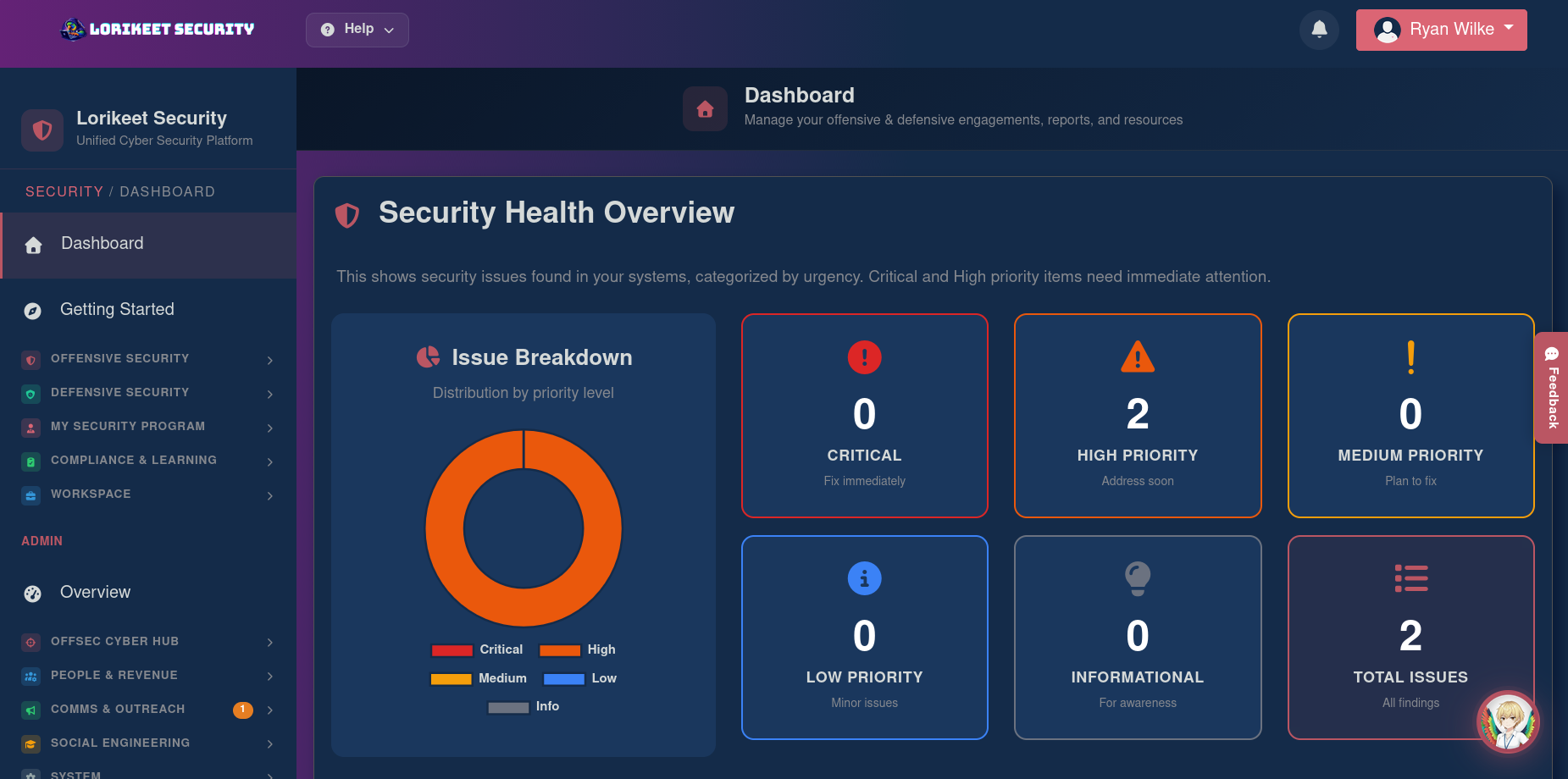
From an executive perspective, the ROI of the Lorikeet approach isn't just in finding bugs; it’s in the preservation of Customer Lifetime Value (LTV). When Flowtriq used Claude to scrub their workflow automation platform, they successfully cleared the "low-hanging fruit" like XSS and template injection. However, Lorikeet’s manual pentest identified five critical findings—including session management edge cases and reverse-proxy vulnerabilities—that the AI missed entirely.
If these vulnerabilities had reached production, the resulting breach would have decimated user trust. For SaaS, Fintech, and Healthcare leaders, the competitive advantage lies in being able to prove to your customers that your security posture isn't just "AI-checked," but "practitioner-validated." In an era where SOC 2 and HIPAA compliance are table stakes, the hybrid model of AI-driven efficiency plus manual offensive security is the only way to protect your brand equity from the volatility of a security-induced mass exodus.
▸Key Strategic Benefits
- Operational Efficiency: By utilizing AI-assisted code reviews (via tools like Cursor or Copilot) early in the dev cycle, your engineering team can resolve 80% of common vulnerabilities before the pentest even begins. This allows high-cost manual testers to focus exclusively on complex logic flaws, maximizing the value of every hour spent on security.
- Cost Impact: The cost of acquiring a new customer is 5x higher than retaining one; the cost of recovering a customer after a data leak is often infinite. Investing in a PTaaS (Pentest as a Service) portal like Lorikeet’s reduces the "time-to-remediation," ensuring that marketing doesn't have to pause growth initiatives due to unresolved security flags.
- Scalability: As your platform grows and integrates more AI-native features, the attack surface expands exponentially. A modern PTaaS model allows for continuous Attack Surface Management, ensuring that security scales at the same velocity as your product roadmap without becoming a bottleneck for new feature releases.
- Risk Factors: Relying solely on AI for security creates a "black box" risk where architectural flaws (like the TLS posture issues found in the Flowtriq study) go unnoticed. Leaders must watch out for over-reliance on automation, which can lead to a "checked-the-box" mentality that fails under real-world adversarial pressure.
▸Navigating the Implementation Horizon
Transitioning to a hybrid security model requires a shift in how Marketing and Engineering collaborate on the product roadmap. Implementation typically begins with integrating AI-driven linting and security scanning directly into the CI/CD pipeline—this is your first line of defense. However, the critical "change management" piece is scheduling manual pentests, such as those offered by Lorikeet Security, at least quarterly or after major architectural shifts.
For organizations in highly regulated sectors like Fintech or Government, the integration requirements involve mapping these findings directly into compliance frameworks like FedRAMP or HITRUST. We recommend a phased rollout: start by deploying a PTaaS portal to gain real-time visibility into current vulnerabilities, then move toward a continuous testing cadence. This ensures that your "Trust Center"—often a key asset for sales and marketing—is backed by live, verifiable data rather than a static PDF report from six months ago.
▸The Evolving Competitive Landscape
The security market is currently split between legacy consultancies and automated scanners. Traditional firms like Mandiant or NCC Group offer deep expertise but often lack the "AI-native" speed required by modern startups. Conversely, automated platforms like Snyk or Wiz provide incredible scale for vulnerability scanning but lack the creative, adversarial thinking necessary to find the "session management edge cases" highlighted in the Flowtriq study.
Lorikeet Security occupies a unique middle ground. By positioning themselves as a firm built for teams already using AI, they acknowledge that the "easy" bugs are gone. Unlike standard automated tools, Lorikeet’s manual intervention identifies the infrastructure and configuration gaps that tools like SonarQube or GitHub Advanced Security are not designed to catch. For a decision-maker, this means choosing a partner that complements your existing AI stack rather than one that tries to replace it.
▸Recommendation
We recommend that leadership immediately audit their current security pipeline for "AI-blind spots." If your team relies solely on automated tools, you are sitting on a churn time-bomb. Engage with a modern pentesting partner like Lorikeet Security to conduct a gap analysis of your AI-audited code. Specifically, visit the official site at https://lorikeetsecurity.com to review their PTaaS portal capabilities. Your goal should be a "defense-in-depth" strategy that marries AI efficiency with human ingenuity.